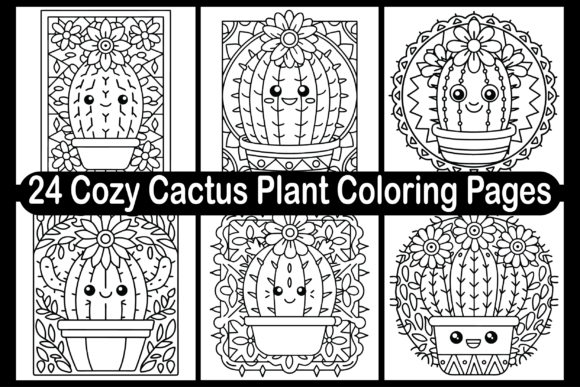
24 Cozy Cactus Plant Coloring Pages
As a designer who spends half my life staring at stitch density charts and the other half trying to make handmade products look expensive on Etsy, I don’t just buy digital assets because they are cheap. I buy them because they solve a problem or add a specific vibe that customers are actively searching for. When I first looked at the 24 Cozy Cactus Plant Coloring Pages, my initial reaction wasn't about the file format—it was about the mood. There is a distinct shift in the craft market right now. People are moving away from hyper-realistic botanicals and toward "cozy," illustrative, and slightly whimsical aesthetics. This bundle taps directly into that feeling.
I evaluated these graphics not just as static images, but as potential machine embroidery design sources. The question isn't whether they look good on a screen; it is whether they translate well when stitched onto fabric. After running through several mental mockups and considering how these would perform in real-world production runs, here is my practical breakdown of how this asset fits into a serious craft business or high-end hobbyist workflow.
The Visual Personality: Why "Cozy" Sells
The term "cozy" in design usually implies soft lines, approachable shapes, and a lack of aggressive detail. For an embroidery project, this is crucial. Highly detailed, intricate line art often gets lost in the texture of fleece or knitted cotton. However, designs with bold outlines and simplified internal details tend to hold their shape beautifully. The Coloring Pages included in this Graphics bundle lean heavily into that simplified, illustrative style. They feel like something you would want to color in with markers—warm, inviting, and unpretentious.
This aesthetic is particularly strong for niche markets. Think about the customer buying a personalized gift for a new parent or a housewarming present for a friend who loves plants. A realistic cactus might feel too sharp or thorny for a nursery, but a "cozy" version feels safe, cute, and comforting. This emotional connection is what drives sales on platforms like Etsy. It transforms a simple plant motif into a symbol of care and comfort.
Real-World Application: From Screen to Stitch
Let’s talk about where this design actually lives. I imagined taking one of these cactus illustrations and applying it to a few common handmade product categories to see if the math holds up.
- Tote Bag Embroidery: A large, centered cactus design on a canvas tote is a classic bestseller. Because these pages are likely vector-friendly or high-resolution raster, they can be scaled up without losing the integrity of the main shapes. The clean lines of a coloring-page style illustration work exceptionally well with satin stitches for the outline, creating a crisp border against the fabric.
- Sweatshirt Embroidery: Fleece is a tricky fabric. It has a nap (texture) that can obscure fine details. If a design relies on tiny, delicate lines, it will disappear. The "cozy" style of these cacti, with its thicker visual weight, stands up better to the texture of sweatshirt material. It looks intentional rather than muddy.
- Baby Embroidery: For onesies or burp cloths, safety and simplicity are key. These designs are perfect for small hoop sizes. They allow for bright, cheerful thread colors without looking cluttered. A single cactus with a smiley face or a pot with a leaf is instantly recognizable and highly giftable.
- Applique Design Potential: One of the most exciting aspects of this bundle is its suitability for appliqué. If you have a machine capable of applique design techniques, these clean outlines are ideal. You could cut out felt or linen shapes based on the cactus forms, stitch them down, and then add minimal satin stitch detailing. This adds dimension and elevates the perceived value of the item significantly.
Technical Considerations for the Designer
While the aesthetic is strong, any experienced embroiderer knows that beauty doesn't always equal stitchability. Here is where you need to be careful when converting these printable mockup styles into functional files.
Stitch Density and Clarity: When digitizing or preparing these images, you must ensure the stitch density is appropriate for the fabric. If you are using a dense fill stitch for the cactus body, it might pucker lightweight cotton. Conversely, if the lines are too thin, they may break during trimming. Always test the design on scrap fabric first. Check the contrast between your chosen thread colors and the base fabric. A light yellow cactus on white fabric will vanish; you need a contrasting background or a dark outline.
Hoop Size Constraints: Not all of these 24 pages will fit comfortably in a standard 4x4 inch hoop. Some may require a larger hoop size to maintain proper scale. If you are producing small shop product items like cap patches, you need to verify which designs are compact enough. Curved surfaces, like baseball caps, also demand simpler shapes. Complex corners in the cactus leaves might get distorted if the tension isn't perfectly calibrated.
Fabric Texture Interaction: Remember that embroidery interacts with fabric texture. On a tea towel, the design will look crisp. On a thick terrycloth towel or a fuzzy blanket, the same design will look softer and less defined. This isn't necessarily bad—it can enhance the "cozy" vibe—but it changes the final look. Test your finished product on the actual material you plan to sell to manage customer expectations.
Commercial Viability and Licensing
For those of us running a craft business, the license is everything. The description mentions this bundle is suitable for KDP interiors and POD products, which suggests a broad commercial allowance. However, you must confirm the specific terms before listing on Etsy or Amazon. Can you sell unlimited physical items? Are there restrictions on digital resale?
Using these designs allows you to diversify your inventory. You aren't limited to just apparel. Think about holiday embroidery projects. Cacti are popular year-round, but they pair surprisingly well with seasonal themes—perhaps a cactus holding a pumpkin for fall, or wearing a Santa hat for winter. This versatility increases the lifespan of your design assets. Instead of buying a holiday-specific file that expires in January, you have a versatile graphic that can be adapted throughout the year.
Final Verdict
The 24 Cozy Cactus Plant Coloring Pages offer a solid foundation for designers looking to inject warmth and personality into their custom apparel and home decor lines. They avoid the trap of being overly complex, making them forgiving for both beginners and pros. They work well as standalone embroidery files, as bases for appliqué, or as elements within larger compositions.
If you are an Etsy seller tired of the same old floral patterns, this bundle provides a refreshing alternative that aligns with current interior and fashion trends. Just remember: the magic happens in the execution. Choose your stabilizer wisely, pay attention to your thread colors, and always, always test before you ship. When done correctly, these designs don't just decorate fabric—they create a tangible sense of comfort that customers love to bring home.